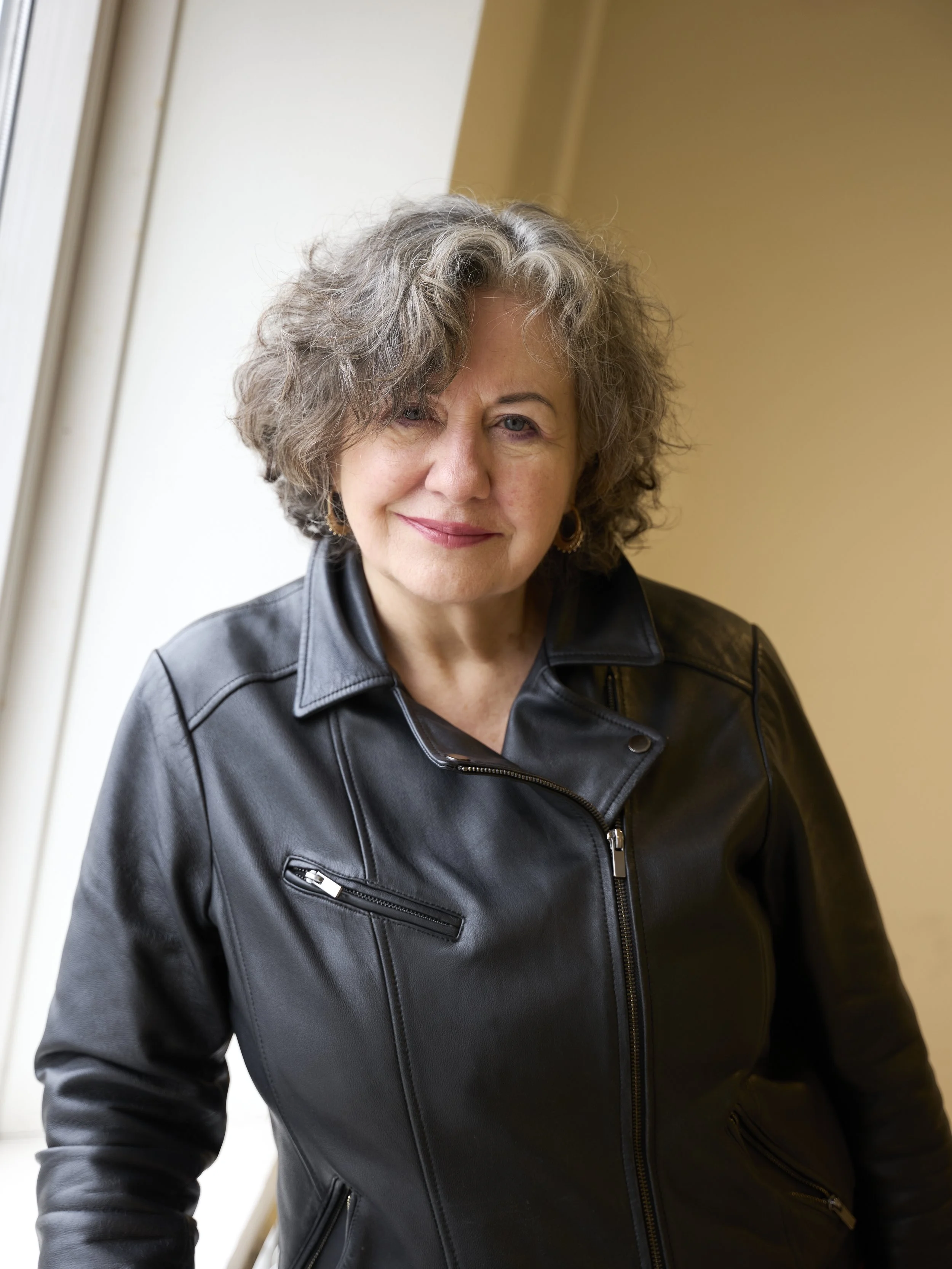
credit Rob Poortvliet
Michèle Lamont is a cultural sociologist who studies morality, group boundaries, and inequality. She has tackled topics such as dignity, respect, stigma, racism, and how we evaluate social worth across societies in Money, Morals and Manners, The Dignity of Working Men, How Professors Think, and the coauthored Getting Respect: Responding to Stigma and Discrimination in the US, Brazil and Israel. Her most recent book is Seeing Others: How Recognition Works and How It Can Heal a Divided World (Penguin/Simon & Schuster 2023). She is at work on a book tentatively titled “Recognition Globally.” The recipient of various awards, she served as President of the American Sociological Association in 2016 and is an elected member of the American Academy of Arts & Sciences, the American Philosophical Society, the British Academy, and the Royal Society of Canada.
Current Research
Recognition, Globally
I am currently conducting research for a book project titled Recognition Globally where I analyze recognition claims in a variety of contexts to help us better understand how to move toward a more inclusive society. Comparative interview-based case studies concern recognition claims through politics by “invisible” US and UK working-class youth living in Manchester, New Hampshire; Manchester, UK; Tampere, Finland; and Osaka, Japan; recognition claims through environmental justice and work by indigenous people in the Northern Mariana Islands (Micronesia) and Anishinaabe Algonquin territories in Eastern Canada; and “impossible cases" where recognition is relatively inaccessible to certain groups (e.g., claims based on racial identity in France and Germany, claims based on sexual identity in Senegal and China, and others). These studies are conducted in collaboration with colleagues across the globe and with Harvard doctoral students
These projects concern recognition in different contexts of uncertainty about the future and groups that vary in terms of their “groupness” (the fluidity of their group identity and experienced symbolic boundaries), and whether and how they experience misrecognition.
This research is supported by various programs at Harvard (Asia Center, Canada Program, FAS Dean’s Competitive Fund for Promising Scholarship, The Salata Institute for Climate and Sustainability, and the Weatherhead Center for International Affairs), as well as external funding from the Hewlett Foundation and Freedom Together Foundation. I will spend AY 2027-28 developing the book manuscript Recognition Globally.
News
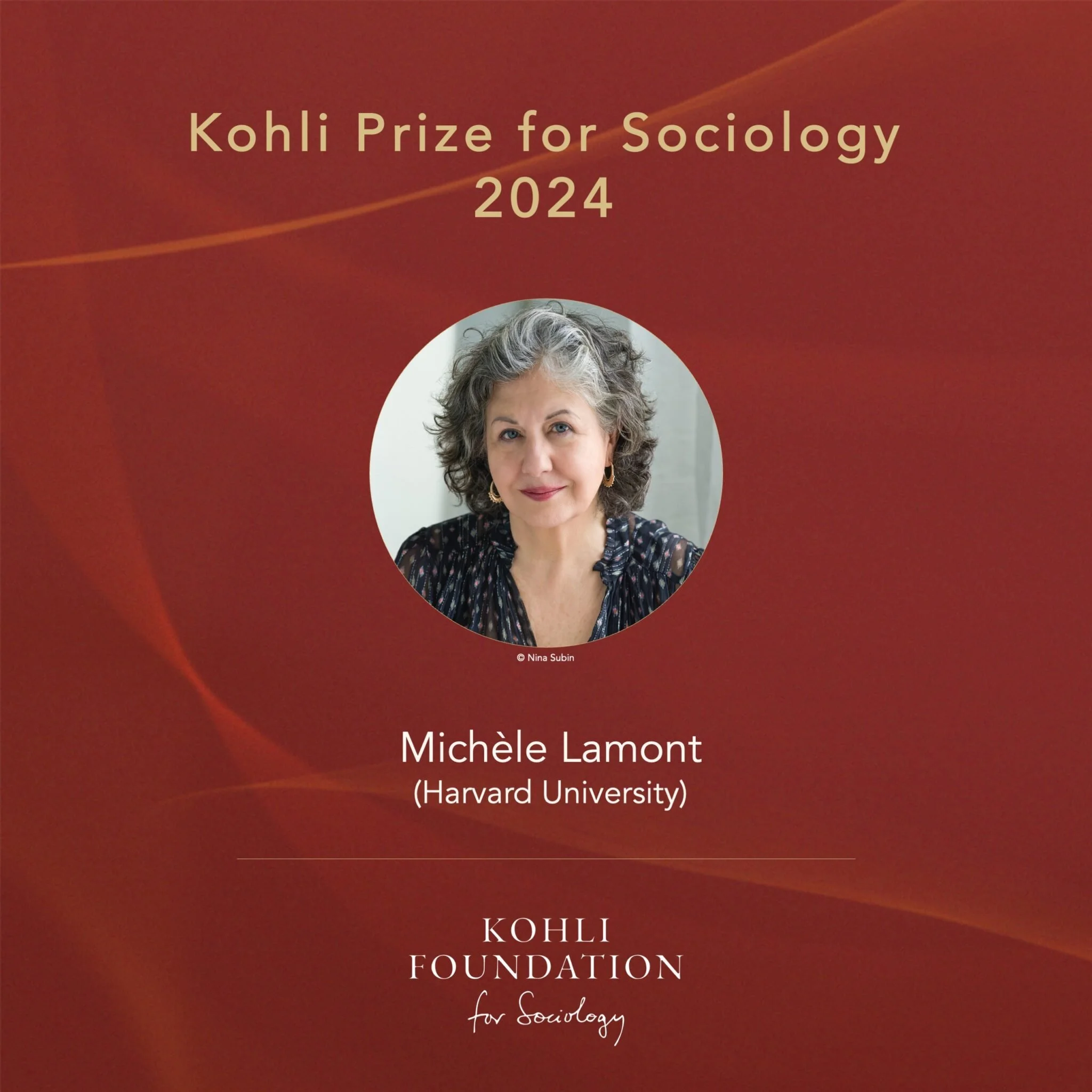
“With her path-breaking comparative research on culture, social inequality and inclusion, she has made a significant imprint on sociological knowledge.”
- The Kohli Foundation for Sociology
May 20, 2024: Michèle Lamont has been elected as a member of the American Philosophical Society.
August 2024: Michèle Lamont received the Distinguished Career Award from the Altruism, Morality, and Social Solidarity Section of the American Sociological Association.
May 2, 2024: Michèle Lamont has been awarded the Kohli Prize for Sociology. The Kohli Prize for Sociology honors exceptional achievement in and contributions to the field and profession of sociology.
Recent Articles in the Popular Press
-
“Trump gets even – Who says culture doesn’t matter?” — LSE Blogs, September 5, 2025
“The art of resistance: Trump’s attack on humanities triggers a blowback movement” with Daniel B. Cornfield — Salon, April 21, 2025
-
“Kamala Harris must lean in: The left doesn’t have to pick between woke and working class”— Salon Magazine, August 4, 2024
“Europe’s Invisible Provinces: How the Urban-Rural Divide Drives Political Polarization” (co-written with Mari Hyland and Massimiliano Mascherini)— Foreign Affairs, May 23, 2024
“Gen Z and the Art of Incentivized Self-Actualization” —Wired Magazine, January 8, 2024
Peer-Reviewed Publications
-
“Reflections on the Experiences of ‘Homing’, Cultural Intimacy, and Recognition for the Study of Symbolic Boundaries and Inequality.” Citizenship in Nativist Times (edited by Menno Hurenkamp and Tamar de Waal), 217-228.
-
“Economic Inequality and Mental Health: Causality, Mechanisms, and Interventions” with Divyangana Rakesh, Koichiro Shiba, Crick Lund, Kate E. Pickett, Tyler J. VanderWeele, and Vikram Patel. Annual Review Clinical Psychology, 21:353-377. https://doi.org/10.1146/annurev-clinpsy-081423-025710
“Lights, Camera, Activism: Recognition Strategies in Hollywood and Comedy” with Derek Robey and Nicole Letourneau. Work and Occupations, 53(1), 214-266. https://doi.org/10.1177/07308884251336699
“Seeing Others for what?” (journal symposium on Seeing Others). Identities, 32(5), 738–743. https://doi.org/10.1080/1070289X.2025.2480911
-
“Feeling overlooked: A rural–urban divide in recognition” with Marie Hyland and Massimiliano Mascherini. Global Policy, 15, 807–822. https://doi.org/10.1111/1758-5899.13454
-
"Recreating a Plausible Future: Combining Cultural Repertoires in Unsettled Times" with Shira Zilberstein and Mari Sanchez. Sociological Science, 10(1): 348-373. DOI: 10.15195/v10.a11
-
“How American College Students Understand Social Resilience and Navigate towards the Future during Covid and the Movement for Racial Justice” with Mari Sanchez and Shira Zilberstein. Social Science & Medicine 301:114890. https://doi.org/10.1016/j.socscimed.2022.114890.