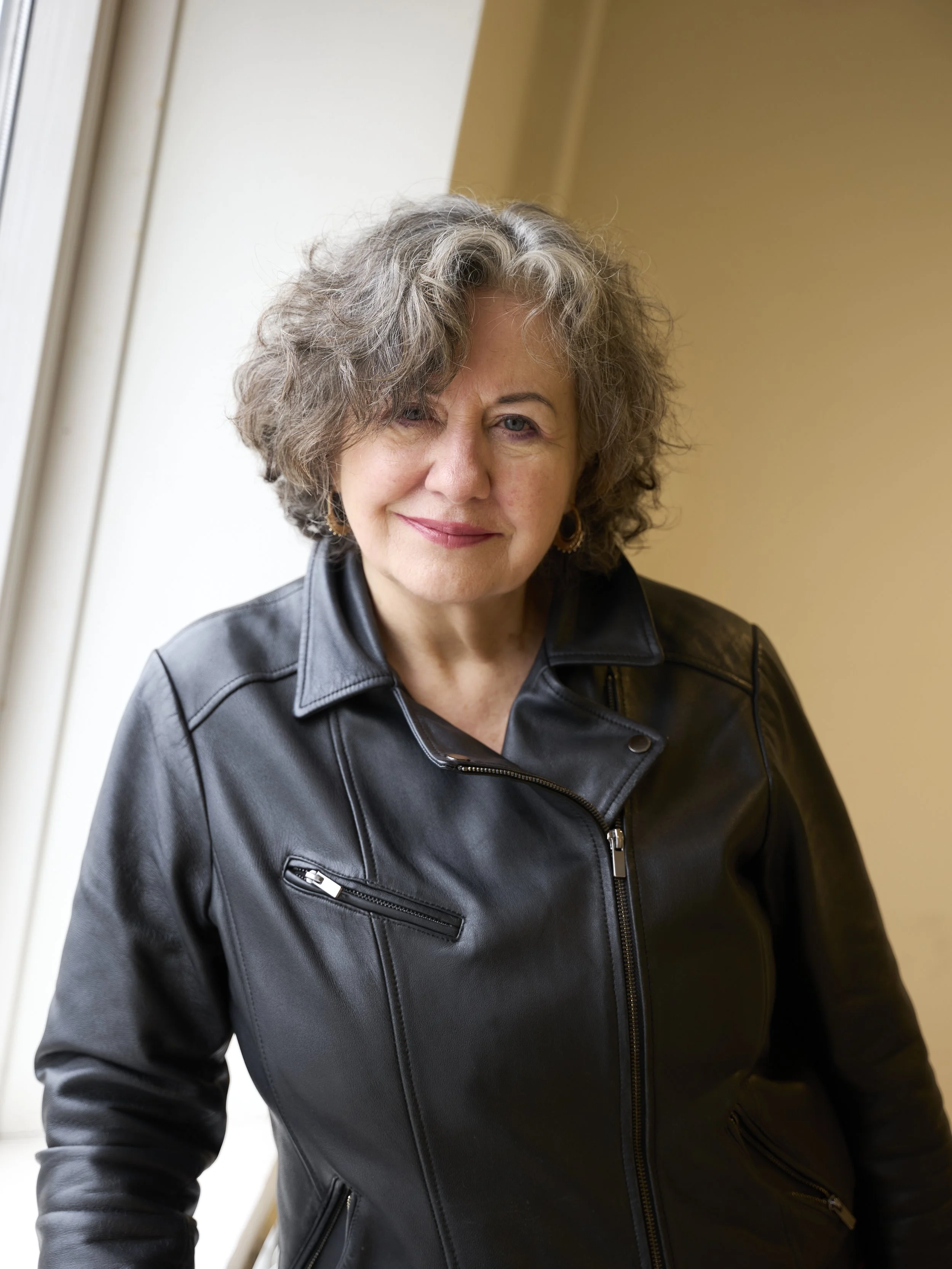
credit Rob Poortvliet
Michèle Lamont is Professor of Sociology and of African and African American Studies and the Robert I. Goldman Professor of European Studies at Harvard University. A cultural sociologist who studies inclusion and inequality, she has tackled topics such as dignity, respect, stigma, racism and anti-racism, class and racial boundaries, social change, and how we evaluate social worth across societies. Her most recent book is Seeing Others: How Recognition Works and How It Can Heal a Divided World (Simon and Schuster (US) and Penguin Random House (UK), 2023). Other books include: Money, Morals, and Manners: The Culture of the French and the American Upper-Middle Class (1992), The Dignity of Working Men: Morality and the Boundaries of Race, Class, and Immigration (2000), How Professors Think: Inside the Curious World of Academic Judgment (2009), and the coauthored Getting Respect: Responding to Stigma and Discrimination in the United States, Brazil and Israel (2016). Prominent edited collections include Cultivating Differences: Symbolic Boundaries and the Making of Inequality (1992), Reconsidering Culture and Poverty (2010), Rethinking Comparative Cultural Sociology (2000), Social Knowledge in the Making (2011) and Social Resilience in the Neo-Liberal Era (2013).
Michèle taught at University of Texas-Austin (1985-87) and Princeton University (1987-2002) before moving to Harvard University. A committed mentor, she received the Everett Mendelsohn Excellence in Mentoring Award from the Harvard Graduate Students Association in 2010. Awards for her scholarship include: the C. Wright Mills Award from the Society for the Study of Social Problems for The Dignity of Working Men, the 2014 Gutenberg award, the 2017 Erasmus Prize, the 2024 Kohli Prize for Sociology. A 2021-22 Carnegie Fellow, she served as President of the American Sociological Association in 2016. She is an elected member of the American Academy of Arts & Sciences, the American Philosophical Society, the British Academy, and the Royal Society of Canada, and she became Chevalier des palmes académiques of the French Government in 2014.
After her popular 2021 TED Talk, Lamont was honored with a Top Ten Breakthroughs in Social Sciences and Humanities Award at the Falling Walls conference in Berlin. Recent endowed lectures she delivered include the Goffman Lecture (U of Edinburgh, 2017), the Mosse Lecture (Humbolt U, Berlin, 2019), the Gunnar Myrdal Lecture (Stockholm U, 2021), and the Agnes Heller Lecture (U of Melbourne 2023), as well as the 2025 Marc Bloch Lecture at the Ecole des hautes études en sciences socials (Paris). Her research has been featured in various mainstream media in North America and Europe (New York Times, Financial Times, Boston Globe, Le Monde, Die Zeit, Fohla de Sao Paolo, Radio France, and others.)
From 2002 to 2019, Michele co-led a large transnational interdisciplinary program on “Successful Societies” funded by CIFAR. Related to this work, she co-chaired the advisory board to the 2022 United Nations Human Development Report, “Uncertain Times, Unsettled Lives: Shaping our Future in a World in Transformation.” At Harvard, she spearheaded a universal mentoring program for junior faculty as Senior Advisor on Faculty Development and Diversity in the Faculty of Arts and Science in 2009-11. She directed the Weatherhead Center for International Affairs, one of Harvard’s two largest international studies centers, from 2014 to 2021, and she continues to lead the Weatherhead Research Cluster on Comparative Inequality and Inclusion. Selected boards service includes the Haut conseil de la science et de la technologie (French Government), the Max Planck Institute for the Study of Religious and Ethnic Diversity (Gottingen, Germany), the Graduate Institute for international and Development Studies (Geneva), the Open Society Foundation Fellowship Program, and the Princeton Institute for International and Regional Studies. She has been a member of the Board of Directors of the American Council for Learned Societies since 2018.
Additional Links: Google Scholar Page, Harvard Scholar Page, Twitter, Academia.edu, ResearchGate